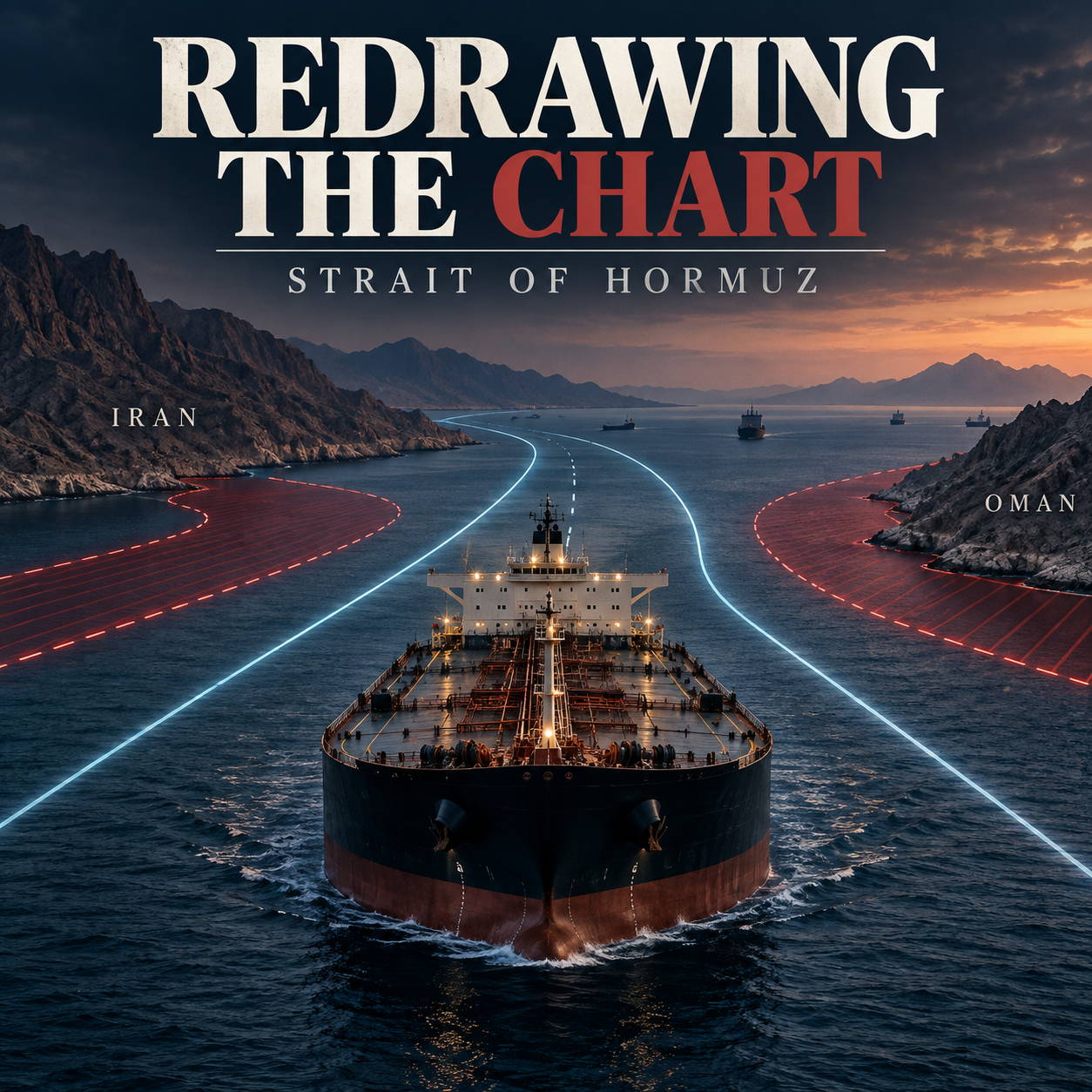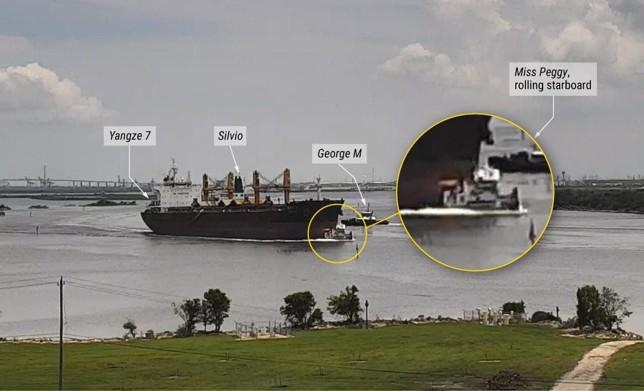
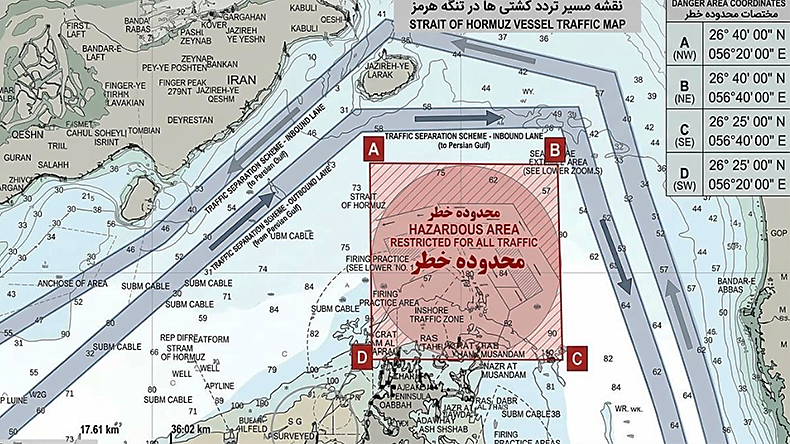
Tehran has launched a formal permission regime over the Strait of Hormuz. Here’s what it means for shipowners, operators, and seafarers — and why the legal risks may outlast the geopolitics.
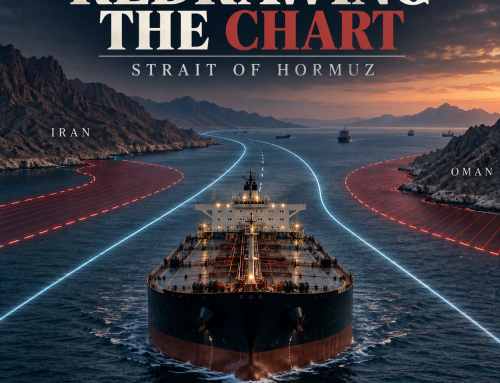
The Strait of Hormuz has always been a chokepoint — a narrow neck of water, barely 21 miles wide at its tightest, through which roughly one-fifth of the world’s oil supply must pass. But Tehran has now taken deliberate steps to make it something else entirely: a “toll booth”, staffed by Iranian officials, where passage depends on permission.
On May 18th, an Iranian-backed entity calling itself the Persian Gulf Strait Authority (PGSA) launched an official X (formerly known as Twitter) account declaring itself “the legal entity and representative authority of the Islamic Republic of Iran for managing the passage and transit through the Strait of Hormuz.” Simply put, all passage and navigation of the Strait requires “full coordination” with Tehran, and “passage without permission will be considered illegal.”
This is not surprising to maritime security professionals. Bloomberg had reported days earlier that shipowners were already being instructed to contact the PGSA for transit authorization via a form asking operators to disclose vessel origin, destination, cargo value, previous flag registrations, and crew nationalities; to many owners, this unusually detailed customs inquiry felt like coercive intelligence-gathering. With the Strait effectively closed to commercial traffic since U.S.-Israel-Iran hostilities began, hundreds of vessels rerouted, war risk insurance cancelled, and ocean mining threats ongoing, the PGSA has now formalized control Tehran has already been exercising on the water.
The International Law Problem
Iran’s position has no grounding in international law. Under UNCLOS (United Nations Convention on the Law of the Sea, the governing framework for maritime navigation) vessels of all nations have an unconditional right of transit passage through international straits used for international navigation. The Strait of Hormuz qualifies unambiguously: according to the law, transit passage cannot be suspended, conditioned on payment, or subjected to a prior-permission regime by the coastal state. Iran can assert or state what it wishes through a social media account, but it cannot lawfully license or deny commercial transit through Hormuz.
That said, law and reality are two different oceans. As one former White House official told Bloomberg, “The U.S. is now scrambling just to restore the status quo ante.” The Trump administration has made reopening the strait its primary objective, even at the cost of deferring some harder questions about Iran’s nuclear program and missile forces.
The Sanctions Trap
For shipping operators, the legal minefield isn’t just in the strait itself, it’s in the paperwork. Any direct payment to the PGSA or coordination with the Islamic Revolutionary Guard Corps (IRGC), which has operational authority in the strait — exposes shipowners, charterers, and insurers to significant U.S. Treasury sanctions risk. The IRGC has been designated a foreign terrorist organization since 2019. The U.S. Treasury has already warned that toll payments to Iran could trigger violations that cut companies off from dollar-denominated transactions and U.S. ports.
This puts operators in a bind: refuse to comply with the PGSA and put vessels and crew at risk; comply, and risk sanctions exposure that could threaten their business. Halvor Ellefsen of Fearnley’s Shipbrokers captured the industry mood well: “The shipowners I’ve spoken to have said they’ll believe it when they see it.”
Despite Iranian assurances of “safe, stable passage” under the new protocols, traffic through the strait has shown little sign of returning to normal.
What Operators and Seafarers Should Do Now
Don’t treat PGSA clearance as legal authorization. Iranian permission to transit the strait provides no immunity from U.S. or European sanctions, no guarantee of safe passage, and no legal basis recognized in any Western court or arbitration proceeding
Review your war risk coverage immediately. Standard P&I and hull policies have almost certainly been suspended for the Gulf. War risk endorsements, where available, may carry geographic exclusions or notice requirements that affect coverage. The interaction between war risk insurance and state-directed coercive acts (as opposed to piracy or terrorism) is legally unsettled territory.
Document everything. If your or anyone you know has had their vessel is boarded, detained, or diverted under the PGSA regime, contemporaneous records — radio logs, AIS data, video, crew statements — will be essential for insurance claims, arbitration, or any sanctions safe harbor defense. The evidentiary burden for demonstrating duress or compulsion is high.
Understand crew’s rights. Seafarers ordered into a war zone, or compelled to engage with hostile state actors, have legal protections under the Jones Act (for U.S. seafarers), the Maritime Labor Convention, and general principles of seaman’s law. An employer who sends crew into harm’s way without adequate warning or protective measures faces significant liability exposure.
The Bigger Picture
The sea is never neutral. It has always been the space where power, law, and commerce collide, and where the strongest current doesn’t always belong to the party with the best legal argument.
The stakes remain high: with the Strait of Hormuz carries roughly 20% of global oil supply and 25–30% of the world’s LNG, every day it remains effectively closed, energy markets decline, supply chains weaken, and each crew takes on more risks which no transit authority has legitimate power to impose on them. Whether Washington ultimately accepts any of these positions by Iran is a geopolitical question, but the legal and practical risks for those sailing these waters are a daily challenge to navigate.
We at the Herd Law Firm are proud to fight for seamen, maritime workers and passengers in all types of personal injury and death claims. As maritime personal injury attorneys (and sailors ourselves!) located in northwest Houston, we never waver in our commitment to help these maritime workers, passengers, and their families when they are injured or mistreated.
Sources
1. Bloomberg — “Trump’s Iran Strategy Collides with Hormuz Reality” (May 8, 2026), Eric Martin & Magdalena Del Valle.
2. gCaptain — “Iran Launches Official ‘Persian Gulf Strait Authority’ Account, Declares Unauthorized Hormuz Transit ‘Illegal’” (May 18, 2026), Mike Schuler.
3. Bloomberg — “Shipowners Stay Cautious on Hormuz as Iran Says Contact Us” (May 2026, cited within gCaptain reporting).
4. gCaptain — “U.S. Treasury Warns Hormuz Toll Payments to Iran Could Trigger Sanctions” (May 2026).
5. United Nations Convention on the Law of the Sea (UNCLOS), Part III, Articles 37–44 (Transit Passage).
6. USNI News — “Updated: Two U.S. Warships Sail Through Strait of Hormuz to Establish New Route for Merchant Ships” (Apr. 11, 2026).