A consumer watchdog has just tallied up the groups (and the billions) spent trying to narrow mariner’s access to the courthouse. Here is why a deckhand, a tankerman, or a longshoreman should read past the headlines, and what is at stake for anyone who earns a living on the water.
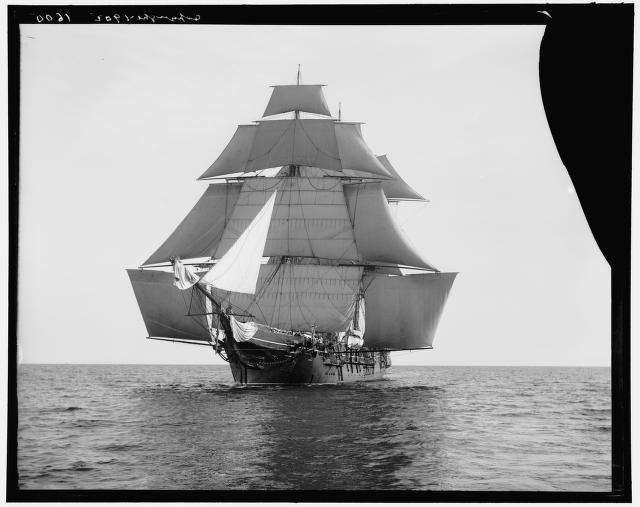
1834, a half-blind Harvard sophomore named Richard Henry Dana Jr. signed onto the brig Pilgrim as a common sailor and spent two years rounding Cape Horn and curing hides on the California coast. He came home, wrote Two Years Before the Mast, and then did something rarer still: he became a lawyer, who spent his career standing up for ordinary seamen against abusive captains and the powerful interests behind them. His book, and the legal treatise that followed it, helped move a nation toward treating sailors as people with rights, rather than cargo with hands.
Today, the fight Mr. Dana picked is still being fought, only now, the weapons are advertising budgets and drafted legislation.
A new report makes the scale of that fight hard to ignore. In June 2026, the Center for Justice & Democracy at New York Law School published a study cataloguing the organizations (and the staggering sums!) devoted to what they call “tort reform.” The authors use quotation marks on purpose, because “reform” may flatter such laws, whose practical effect is to make more difficult for an injured person to hire a lawyer, reach a jury, and recover fair compensation. Many of these “tort reform” groups spend many millions of dollars a year; some industries, the report finds, now operate at a level reaching billions annually.
The study runs to dozens of pages and dozens of organizations. Its authors, Emily Gottlieb and Joanne Doroshow, have tracked this movement since the Center opened its doors in 1998, and what they describe is not a scattering of cranky business groups but an entire legal industry unto itself—trade associations, lobby shops, “research” institutes, election committees and private consulting firms, many spending millions a year, a few whole sectors spending into the billions. The report keeps the quotation marks around “reform” throughout, and after reading it, you understand why: there is nothing reformist about a campaign whose object is to make sure that fewer injured people are ever paid.
Who Is Spending, and How Much
Most names will not mean much to a layperson, and that is somewhat the point.
Start with the group that gave the movement its name. The American Tort Reform Association (ATRA) was founded in 1986, at the dawn of the modern campaign, to represent hundreds of U.S. and foreign corporations—tobacco, insurance, chemical, auto and drug companies prominent among them—in a coordinated drive to rewrite liability law. For much of its first decade, the tobacco industry was a leading patron; in 1995 alone, by one accounting, tobacco money supplied more than half of the association’s roughly ten-million-dollar budget. The group is smaller now, reporting about $5.5 million in revenue in 2024, but no less busy. Its tax-exempt foundation self-publishes the yearly “Judicial Hellholes” report—a widely debunked list built to shame the particular courts and juries willing to hold reckless companies to account—and it operates a political action committee (PACs) that becomes highly active during elections.
ATRA’s real footprint, though, is at the state level, where for three decades it has seeded local front groups with reassuring, civic-sounding names: “Citizens Against Lawsuit Abuse,” “Stop Lawsuit Abuse,” “Lawsuit Abuse Watch.” The template dates to the early 1990s, when the association hired public-relations firm APCO & Associates (an arm of advertising giant Grey Advertising, who had worked for both the tobacco companies and the insurers) to manufacture grassroots enthusiasm for tort restrictions.
Many internal Philip Morris records, recovered by litigation, show the same operatives coordinating “tort reform” coalitions across the country today. The groups still run on shared scripts and centralized strategy, concentrated lately in a handful of states—California, Florida, Illinois, Louisiana, Texas and West Virginia. New ones keep appearing: in 2025, Texas trucking, fuel and lawsuit-reform interests launched a coalition of more than six hundred member entities, from insurers and pipelines to consumer goods firms.
The heaviest purse belongs to U.S. Chamber of Commerce (USCC), the largest corporate lobby in the nation, which took in more than $225 million in 2024 and runs its anti-lawsuit work through the Institute for Legal Reform (ILR). The figures are hard to fathom: by the report’s tally, that arm spent roughly half a billion dollars on federal lobbying between 1999 and 2020, and the Chamber has spent hundreds of millions more since. The money does not all go to Congress. In the mid-2000s the Chamber’s legal-reform operation quietly built a wire service and a string of state “Record” newspapers—in Illinois, Louisiana, California, Florida, West Virginia and elsewhere—engineered to breed distrust of plaintiffs and their lawyers, often without telling readers who was behind the coverage. And while the Chamber preaches restraint to everyone else, it is itself a prolific litigant: an independent review of four hundred of its court cases found it backing Fortune 500 companies and billion-dollar firms most of the time, with restricting access to the courts a recurring theme.
Some of the most consequential work happens in plain sight — but under another name. The American Legislative Exchange Council (ALEC) — pairs conservative state lawmakers, who pay a token hundred-dollar membership, with corporate members who pay far more for the privilege of drafting “model” bills that legislators then introduce as their own, the corporate fingerprints nowhere to be seen. For years the council ran a dedicated Civil Justice Task Force, led by the American Tort Reform Association’s own general counsel and devoted to shrinking corporate liability; it has since been folded into a new Judiciary Task Force with the same priorities. Good-government groups have been arguing for more than a decade that the organization is, in effect, a corporate “bill mill” wearing the costume of a public charity.

Behind much of it sits the Civil Justice Reform Group (CJRG), a deliberately low-profile body of corporate counsel that functions as the movement’s bank. It keeps virtually no staff—just a managing director, a small board and member companies that decide where the money goes—and it spends its days gathering funds and routing them to allied organizations. The American Tort Reform Association has been the single largest beneficiary, collecting more than $24 million from the group between 2007 and 2024. Who exactly funds the Civil Justice Reform Group, and how much, it does not say.
If you want the mission stated clearly, listen to the industry itself. Speaking to a roomful of risk managers in San Diego in 2024, Chubb’s (a major property insurer) chief executive Evan Greenberg urged corporations to bankroll a sustained effort against lawsuits—one that, in his words, should be “approached like a long-term political campaign.” That is an unusually straightforward description of what the rest of the report documents in detail: “a coordinated, well-funded, multi-decade project to reshape the civil justice system” in favor of the defendants who think of themselves as paying for it.
The New Money
If the older outfits are familiar, a crop of newer ones shows where the campaign is heading—and why it should interest anyone who works around boats, trucks or rideshare. In January 2025, a $10 million launch created a group called Protecting American Consumers Together (PACT), which spent the year running coordinated advertising and public-relations campaigns for tort restrictions in state capitals and in Washington. Its reported backers include Waffle House, Uber, and the Owner-Operator Independent Drivers Association, the small-trucker lobby. In Georgia, by one account, Uber financed a seven-figure ad blitz on the group’s behalf. In February 2026 the outfit convened an inaugural “Lawsuit Abuse” summit headlined by the American Trucking Associations and the leaders of state lawsuit-reform groups from Texas, Florida and New York.

Other newcomers are blunter still. A group called Building America’s Future (BAF) runs a public campaign—“Make America Affordable Again”—that frequently disparages trial lawyers and pushes “loser pays” in television and digital ads, steered by former top Trump campaign strategists; its money has been linked in reporting to Elon Musk, and in a single year it reported nearly $100 million in contributions. In New York, an Uber-funded committee poured more than $8 million into a successful pressure campaign that bent the state budget in the company’s favor, shifting costs away from Uber and onto people injured in crashes. The theme is unmistakable: companies whose business is moving people and freight are spending heavily to make sure that, when something goes wrong, the people they hurt have a harder time being made whole. A seaman should recognize the shape of that ambition immediately, because it is his courthouse door being shut, too.
Why a Sailor Should Care
When a seaman is hurt on the job, the Jones Act gives him something most injured workers do not have: the right to sue his employer for negligence and, in the words of the statute, to bring “a civil action at law, with the right of trial by jury.”
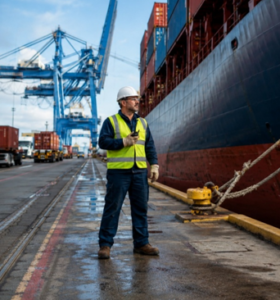
That phrase is the heart of the matter—not a damages cap written by a lobbyist, not an arbitrator chosen by the company— decides what a crushed hand, a ruined back, or a spouse’s loss is worth. Nearly every tactic described in the report is, at its base, an effort to take that decision away from the jury or to keep the case from ever reaching one. The trucking industry offers the clearest preview: its trade groups have spent years attacking large verdicts as “nuclear” and pressing for the same caps, the same immunity, and the same procedural roadblocks that would just as easily shut the courthouse door on a maritime worker.
It is worth considering the trucking example, because the maritime worker and the truck-crash victim are fighting: A jury of ordinary people the same legal “machine”. The largest trucking trade association in Washington runs on a budget of roughly $50 million and spends millions a year lobbying, with attacking large jury verdicts among its stated priorities. The owner-operators’ lobby spends millions more and uses its media to amplify the cause—the same lobby now helping bankroll the consumer-front group described above. The industry even keeps a tax-exempt “research” arm that produces studies blaming victims, lawyers and juries for its troubles. Tellingly, when that arm surveyed lawyers on both sides, the defense bar conceded that the plaintiffs’ lawyers were simply doing the better job, and its own interviewees admitted what the safety record has long shown: carriers tend not to spend enough on preventing the crashes in the first place.
However, the “machine” does not always win. In May 2026, the U.S. Supreme Court unanimously rejected an effort by freight-brokerage interests to win immunity for negligently hiring unsafe trucking companies—a useful reminder that these campaigns can be beaten when courts and juries are left free to do their work. But the broader effort grinds on, and the tactics travel easily from one industry to the next.
Stripped of euphemisms, the campaign tends to rely on a handful of recurring moves:
- Caps on damages, which limit what a jury may award — no matter how severe the injury;
- “Loser pays” rules, which threaten an injured worker with the other side’s legal bills and so deter all but the most certain cases;
- Forced arbitration clauses, buried in fine print, that quietly trade your jury for a private decision-maker;
- Federal preemption and industry immunity, which ask Congress to wipe out state remedies altogether; and
- Manufactured public opinion—the ads, the “research” reports, and the “hellhole” lists designed to make you distrust juries before you ever sit on one.
Two of those moves deserve a closer look, because they are the ones most likely to reach a seaman. When Congress grants an industry outright immunity, or decides to “preempt” a field and sweep aside state law, it can quietly erase tort claims a worker would otherwise have. It has happened before, industry by industry—vaccine makers in the 1980s, the small-aircraft business in the 1990s, gunmakers and rental-car companies in the 2000s. Today, the same shield is being sought by makers of the engineered-stone countertops that are giving fabrication workers an epidemic of silicosis, and by the rideshare and car-sharing companies angling to be treated (legally) like rental companies. The pesticide giant behind Roundup, having lost thousands of cancer cases, is now spending tens of millions through a new alliance to win immunity bills in Congress and the statehouses. None of these particular fights is about sailors, but each one will inform how future tort lawsuits are regarded, and the maritime employer who would like to be next is watching closely.
The Oldest Trick in the Book
If the rhetoric of a “lawsuit crisis” feels engineered, that is because it was. The report traces it to the 1980s, when the insurance industry’s own information institute spent millions—by one figure, some $6.5 million—on an advertising campaign whose stated aim was to flip the public’s anxiety about an insurance crisis into a belief that the real problem was a lawsuit crisis. The ads ran under headlines warning that not even a priest could escape the litigation menace. When a member of Congress asked the industry to substantiate one of them, it emerged that—at the time the ads ran—the insurers had not yet paid a single dollar on the cases they were citing. The script has barely changed in forty years; only the production values have improved.
The script still needs a steady supply of authoritative-sounding numbers, and an industry of professionals exists to provide them:
- Marathon Strategies, a corporate public relations firm, now publishes an annual report on “nuclear” and “thermonuclear” verdicts, marketing it to defense lawyers and insurers as a tool for managing the “court of public opinion.”
- Perryman Group’s Ray Perryman, a Texas economist whose studies are a fixture of these campaigns, has been heavily criticized by independent researchers; one described his work as “the wrong study with the wrong numbers that reached the wrong conclusions.” He has also been named the “most bought economist” in the state by Wall Street Journal, known to “produce any conclusion you want”.
- George Mason University Law & Economics Center (LEC) at Antonin Scalia Law School, which is significantly funded by organizations and oil, drug and insurance interests such as the USCC, the UCRG, Exxon, Johnson & Johnson, Merck, and State Farm, holds educational seminars and courses for state and federal judges.
What Their Own Numbers Show
The National Federation of Independent Business (NFIB) which presents itself as the voice of small business, takes in well over $100 million a year, and reliably lobbies for tort restrictions. But, when the group surveys its own members about their biggest problems, the cost and frequency of lawsuits lands near the very bottom of the list, year after year. The campaign names this as a reason to spend more on advertising.
The medical lobby ran into the same wall. During the insurance industry’s last great price spike, in the early 2000s, the nation’s largest doctors’ group mounted an enormous campaign blaming malpractice lawsuits for a supposed health-care “crisis.” At the request of sympathetic members of Congress, the Government Accountability Office (GAO) investigated—and concluded that the crisis did not exist. The doctors’ group reportedly asked the agency to hold the report back and to soften its findings; the agency reaffirmed them instead. As the report notes, the association’s enthusiasm for capping juries tends to rise and fall not with patient safety, but with the insurers’ own pricing cycle.
An Old Bulwark
Sadly, none of this is new whatsoever. The right to have a civil dispute decided by a jury of one’s peers is written into the Seventh Amendment and into nearly every state constitution; the founders fought a revolution in part to secure it. The same is true today of a deckhand whose claim is capped before trial, or routed into arbitration, or erased by an immunity bill he never heard of.
For the maritime worker, the risks are very real. The Jones Act right to a jury is a creature of statute, and a statute is precisely the kind of thing this machinery exists to amend — a damages cap here, an arbitration clause slipped into a crew agreement there, a quiet preemption rider tucked into an unrelated bill. Any one of them could hollow out the guarantee while leaving its words on the page. The half-billion-dollar lobbying campaigns and the friendly “research” are not aimed at a deckhand today. They are aimed at the legal soil in which his rights happen to grow.
Ultimately, best practice is not to be alarmed, but to be informed; The people on the other side of the victims are extraordinarily well-funded, and they are counting on the public to not pay attention. The courthouse door has been open to American sailors, in one form or another, since Dana’s day. Knowing who is leaning on it is the first step to keeping it open.
A Field Guide to the Groups
The report’s roster is long, and most of its members never advertise what they do. What follows is a plain-language guide to the organizations and entities it names, grouped roughly as the study groups them. A few—the American Tort Reform Association, the U.S. Chamber’s Institute for Legal Reform, the American Legislative Exchange Council, the Civil Justice Reform Group—are described at length above and appear here only in brief. Dollar figures are the most recent the report gives; tax status is noted where the study specifies it.
Dedicated “Tort Reform” Groups
American Tort Reform Association (ATRA). The original “tort reform” trade group, a 501(c)(6) founded in 1986; about $5.5 million in revenue in 2024. It runs the “Judicial Hellholes” report and a national Citizens Against Lawsuit Abuse affiliate. Discussed above.
State “Citizens Against Lawsuit Abuse” (CALA) groups. Local front groups, also operating as “Stop Lawsuit Abuse” and “Lawsuit Abuse Watch,” built with the public-relations firm APCO & Associates (then a Grey Advertising subsidiary) and concentrated in California, Florida, Illinois, Louisiana, Texas and West Virginia. Discussed above.
Other state coalitions. Jurisdiction-named groups such as Texans for Lawsuit Reform, the Lawsuit Reform Alliance of New York and the Missouri Civil Justice Reform Coalition. In 2025, Texas interests launched the Lone Star Economic Alliance, counting more than six hundred member entities.
U.S. Chamber of Commerce / Institute for Legal Reform (ILR). The nation’s largest corporate lobby (more than $225 million in revenue in 2024) and its dedicated anti-lawsuit arm, responsible for roughly half a billion dollars in federal lobbying from 1999 to 2020. Discussed above.
American Legislative Exchange Council (ALEC). A 501(c)(3) that pairs conservative legislators with dues-paying corporate members to draft “model” bills; its civil-justice work now lives in a Judiciary Task Force. Discussed above.
Civil Justice Reform Group (CJRG). A low-profile 501(c)(6) of corporate counsel that funds the movement, routing more than $24 million to ATRA between 2007 and 2024. Discussed above.
Recent Upstarts
Protecting American Consumers Together (PACT). A 501(c)(4) launched in January 2025 with a $10 million stake; backers reportedly include Waffle House, Uber and the Owner-Operator Independent Drivers Association. Discussed above.
Building America’s Future (BAF) / “Make America Affordable Again.” A 501(c)(4) running “loser pays” ads, steered by former Trump campaign strategists and linked in reporting to Elon Musk; it reported nearly $100 million in contributions in 2024. Discussed above.
Citizens for Affordable Rates (CAR). A New York independent-expenditure committee funded, it appears, entirely by Uber, which had put $8.3 million into it by April 2026. It bankrolled a successful advertising and lobbying campaign that shaped New York’s budget bill to push crash costs away from the company and onto injured New Yorkers, making meaningful recovery harder for people hurt in collisions.
Alliance for Consumers (AFC). A right-wing, self-described nonprofit (not separately incorporated) that produces reports and media campaigns to erode public confidence in large consumer-protection lawsuits. Led since 2020 by O.H. Skinner, a former Solicitor General of Arizona, it targets pro-consumer state attorneys general—especially over class actions—and plaintiff firms — and has lately gone after state climate suits against the fossil-fuel industry. It operates alongside a 501(c)(4), the Alliance for Consumers Action Fund, which reporting has tied to Leonard Leo’s “dark money” network; the fund ran ads against an Iowa attorney general who then lost reelection.
Consumer Choice Center (CCC). A far-right libertarian 501(c)(4) that operates globally and runs a multi-pronged communications push for tort restrictions. It reported more than $6.3 million in contributions in 2024 and has acknowledged funding from industries ranging from energy, nicotine and alcohol to chemicals, banking and cryptocurrency; its seed money came from the Koch-linked group Students for Liberty.
Insurance Industry Allies
Chubb. The property-casualty insurer whose chief executive, Evan Greenberg, is among the movement’s most vocal champions; in 2024 it gave to the Institute for Legal Reform, ATRA, the Civil Justice Reform Group and a string of state groups. Discussed above.
Insurance Information Institute (Triple-I). A 501(c)(6) industry mouthpiece behind the 1980s campaign that recast an insurance crisis as a “lawsuit crisis”; now an affiliate of The Institutes. Discussed above.
American Property Casualty Insurance Association (APCIA). A 501(c)(6) representing home, auto and business insurers—more than 300 member groups and 1,200 companies—with a heavy lobbying, amicus and bill-tracking operation; it reported more than $77.8 million in revenue in 2024.
Coalition for Litigation Justice (CLJ). A 501(c)(6) founded by insurers in 2000 and funded by property-casualty insurers and reinsurers; it has filed hundreds of amicus briefs aimed at narrowing liability, including in asbestos cases.
Legal System Abuse Coalition. An informal alliance formed in 2022 by Zurich North America that gathers insurers, brokers, businesses, trade associations and tort-reform groups (ATRA, the Institute for Legal Reform and APCIA among them); it hosts “symposiums” and claims credit for legislative wins, but discloses no budget.
Medical Professional Liability Association (MPL Association). Formerly the Physician Insurers Association of America, this 501(c)(6) represents medical-malpractice insurers and has long lobbied to limit malpractice suits and patient compensation.
Automakers and Autonomous Vehicles
Alliance for Automotive Innovation. The main automaker trade and lobbying group (formed 2020), whose members include GM, Ford, Toyota and most major manufacturers; its chief executive has urged Congress to adopt federal preemption, and it spent more than $7.8 million on federal lobbying in 2025. The report’s worry is that pending autonomous-vehicle bills lack the precise language needed to preserve state lawsuits by people hurt in AV crashes.
Autonomous Vehicle Industry Association (AVIA). Founded in 2016 (originally the Self-Driving Coalition for Safer Streets) by Ford, Lyft, Uber, Volvo and Waymo; it lobbies to shape AV liability rules and now counts Amazon, DoorDash, FedEx, GM, Honda, Lyft, Rivian, Uber, UPS and Waymo among its members.
Crypto
Crypto Council for Innovation (CCI). A 501(c)(6) global trade association (2021) whose members include Block, Coinbase, Kraken and Paxos; its push for federal crypto rules could preempt state tort law. It has spent more than $3.5 million on federal lobbying.
Blockchain Association. A U.S. 501(c)(6) (members include Coinbase and Kraken) pressing, through lobbying and litigation, for a national crypto framework that could override state tort laws; it has spent more than $10.2 million lobbying since 2018.
The Digital Chamber (TDC). The largest U.S. digital-asset trade association (founded 2014), advocating federal frameworks that could preempt state tort law; it has spent more than $4.5 million lobbying, including on the CLARITY and GENIUS Acts. The report warns that the CLARITY Act, as drafted, could limit the ability of people harmed by crypto fraud or platform failures to sue.
Medical
American Medical Association (AMA). The nation’s largest doctors’ group and a longtime advocate for capping patients’ legal rights; it spent more than $23.7 million on federal lobbying in 2025, and its tort-reform zeal tends to track the insurance pricing cycle. Discussed above.
Manufacturers
National Association of Manufacturers (NAM). The largest manufacturing trade group, a 501(c)(6); its Manufacturers’ Accountability Project defends oil majors against climate-liability suits and runs public relations against climate litigation, with some funding tied by congressional subpoena to BP. Notably, NAM’s own member surveys never rank lawsuits among top concerns.
Product Liability Advisory Council (PLAC). A 501(c)(6) of in-house and outside defense counsel—board members have included counsel for Bayer, Beretta, GM, Hyundai, OpenAI, Pfizer, Qualcomm, U-Haul and Volkswagen—that files amicus briefs in major products-liability and mass-tort cases.
Oil and Gas
American Petroleum Institute (API). The largest oil-and-gas trade group, a 501(c)(6), and a leading opponent of climate-liability litigation; it spent more than $7.8 million on federal lobbying in 2025, including on efforts to blunt state liability laws.
American Energy Institute. A 501(c)(3) fossil-fuel advocacy group (formerly the Texas Natural Gas Foundation) led by former Texas legislator Jason Isaac and linked in reporting to Leonard Leo; it opposes climate litigation and runs a trade arm, the American Energy Association. Not to be confused with the American Enterprise Institute, below.
Pesticide Manufacturers
Modern Ag Alliance (MAA). A 501(c)(4) that Bayer launched in 2024 and the leading force behind pesticide-immunity bills; it reported more than $15.6 million in revenue in 2024, over $13 million of it paid to a single public-relations firm. The campaign follows years of Roundup cancer litigation.
CropLife America. A 501(c)(4) with global ties to Bayer and other chemical companies, also a major backer of pesticide-immunity legislation; it spent more than $2.6 million on federal lobbying in 2025.
“Small” Business
National Federation of Independent Business (NFIB). A 501(c)(6) that bills itself as small business’s voice (revenue near $116 million in 2024), but lobbies for tort restrictions and runs a litigation arm—even though its own members rank lawsuits near the bottom of their concerns. Discussed above.
Technology
Computer and Communications Industry Association (CCIA). An international 501(c)(6) (members include Amazon, Apple and Google) that resists narrowing Section 230; it reported more than $19.3 million in contributions in 2024 but spent only about $330,000 on lobbying in 2025.
NetChoice. A trade association (2001) for Amazon, Google, Meta, OpenAI, TikTok and YouTube, with an active litigation center and a strong defense of Section 230; contributions topped $22.1 million in 2024.
TechNet. A national group of technology chief executives and senior leaders (its Executive Council includes Amazon, Google and Intuit) that defends Section 230 and pushes preemption of state laws; it spent close to $2 million on federal lobbying in 2025. The report stresses that individual Big Tech firms spend far more—by one analysis, more than $1.1 billion—than these trade groups.
Trucking
American Trucking Associations (ATA). The largest trucking trade group in Washington (about a $50 million budget); attacking large jury verdicts is among its named priorities. Discussed above.
Owner-Operator Independent Drivers Association (OOIDA). A 501(c)(6) for small-business truckers that lobbies for tort reform, amplifies the cause through its Land Line magazine, and helps fund PACT. Discussed above.
Transportation Intermediaries Association (TIA). A 501(c)(6) for freight brokers that sought immunity for negligently hiring unsafe trucking companies; the Supreme Court unanimously rejected its position in May 2026. Discussed above.
American Transportation Research Institute (ATRI). The industry’s 501(c)(3) research arm, whose verdict studies feed the tort-reform case—though its own surveys have conceded that plaintiff lawyers outperform the defense and that carriers underinvest in crash prevention. Discussed above.
Corporate Defense Bar
Lawyers for Civil Justice (LCJ). A 501(c)(6) (founded 1987) that is the defense bar’s voice in the federal civil-rules process, where technical changes can quietly affect ordinary people’s access to justice; it reported nearly $2.2 million in revenue in 2024.
Defense Research Institute (DRI). A 501(c)(6) membership group of civil defense lawyers and in-house counsel that advances tort-reform aims through committees, amicus filings and publications; program revenue topped $10.5 million in 2024.
Washington Legal Foundation (WLF). A 501(c)(3) founded in 1977 that uses litigation, amicus briefs and op-ed-style advertisements to shield corporations from liability; its advisory board has included counsel from Chevron, GlaxoSmithKline, Hyundai, Roche and State Farm, and corporations supplied about 87 percent of its funding in 2025.
“Research” Groups
American Enterprise Institute. A 501(c)(3) think tank that has amplified tort-reform arguments, most actively in the early 2000s through its now-defunct Liability Project; ironically, some of its own research has exposed the dangers of certain “reforms.” Not the American Energy Institute, above.
George Mason University Law & Economics Center (LEC). Housed at the Antonin Scalia Law School, it promotes tort reform through research and a Judicial Education Program that runs seminars for sitting judges; its funders have included Exxon, Johnson & Johnson, Merck, State Farm, the U.S. Chamber and the Civil Justice Reform Group.
The Perryman Group. A private economic-consulting firm that produces client-driven studies for tort-reform, insurance and business coalitions; its principal was once called the most bought economist in Texas. Discussed above.
Marathon Strategies. A corporate-consulting firm that publishes an annual “thermonuclear verdicts” report marketed to corporate-defense and insurance audiences. Discussed above.
Sources
Center for Justice & Democracy at New York Law School, Civil Justice Skewed: The Groups and the Billions Spent Advocating for “Tort Reform” (June 2026), centerjd.org.
Public Citizen, Consumer Law & Policy Blog, “‘Tort Reform’ Groups, 2026 Update” (June 2026), clpblog.citizen.org.
Jones Act, 46 U.S.C. § 30104; Legal Information Institute (Cornell Law School), “Jones Act,” law.cornell.edu/wex/jones_act.
Gavin Souter, “Chubb’s Greenberg calls for prolonged tort reform campaign,” Business Insurance (May 7, 2024), businessinsurance.com.
National Park Service, “Richard Henry Dana Jr.,” nps.gov; Encyclopaedia Britannica, “Richard Henry Dana”; U.S. Naval Institute, Naval History (Sept. 1990).
Parklane Hosiery Co. v. Shore, 439 U.S. 322 (1979) (Rehnquist, J., dissenting); U.S. Const. amend. VII.
U.S. Government Accountability Office, reports on medical malpractice premiums and access to health care (2003), gao.gov.
Public Citizen, analyses of U.S. Chamber of Commerce litigation (2024) and technology-industry lobbying (2025), citizen.org.
American Transportation Research Institute, Understanding the Impact of Nuclear Verdicts on the Trucking Industry, truckingresearch.org.
Common Cause, complaint and supplemental IRS filings regarding the American Legislative Exchange Council (2012), commoncause.org.
Montgomery v. Caribe Transport II, LLC, 608 U.S. ___ (2026), supremecourt.gov.
We at the Herd Law Firm are proud to fight for seamen, maritime workers and passengers in all types of personal injury and death claims. As maritime personal injury attorneys (and sailors ourselves!) located in northwest Houston, we never waver in our commitment to help these maritime workers, passengers, and their families when they are injured or mistreated.
The information in this post is for general informational purposes only and does not constitute legal advice. For questions specific to your maritime law issue, please contact us at 713-955-3699 or at Charles.Herd@HerdLawFirm.com.